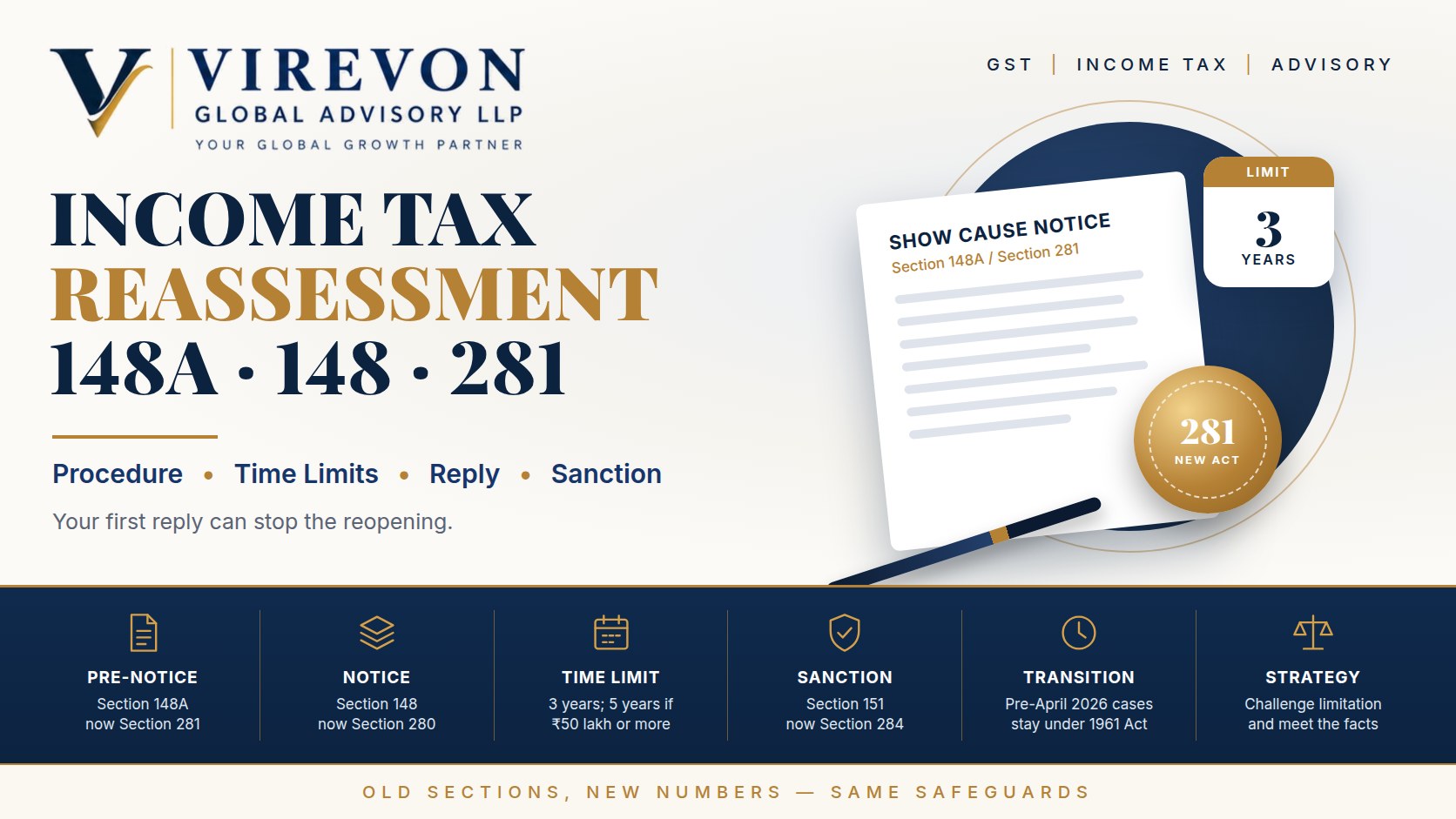
Reassessment, or “reopening”, lets the Assessing Officer revisit a year that is already closed if they have information suggesting that income escaped assessment. It starts with a show cause notice, and your reply at that first stage is your best chance to stop the reopening altogether. This guide covers the procedure under section 148A of the Income-tax Act, 1961 and its successor provisions, sections 279 to 286 of the Income-tax Act, 2025.
Old and new section numbers
- Power to reassess: section 147 → section 279
- Reassessment notice: section 148 → section 280
- Pre-notice show cause procedure: section 148A → section 281
- Time limits: section 149 → section 282
- Sanction: section 151 → section 284
Proceedings that began before 1 April 2026 continue under the 1961 Act until they conclude. Notices for older years can therefore still cite section 148A and 148 after that date.
How the procedure works
- Information. The officer holds information suggesting escaped income: AIS entries, reports from other agencies, search or survey material, audit objections.
- Show cause notice (148A / 281). You are given the information relied on and asked why a reassessment notice should not be issued. The time to reply is stated in the notice.
- Order. After considering your reply, the officer passes a reasoned order, with the prescribed sanction, deciding whether it is a fit case.
- Reassessment notice (148 / 280). If the answer is yes, a notice issues along with that order, and you are required to file a return for the year.
- Assessment. The reassessment then proceeds, usually faceless, much like scrutiny.
Time limits
Under the 1961 Act as amended from 1 September 2024, a notice can generally issue within 3 years from the end of the relevant assessment year. It can issue up to 5 years only where the escaped income, in the form of an asset, expenditure or book entry, is ₹50 lakh or more. Limitation is one of the strongest grounds against reopening, so always compute it first.
How to reply to the show cause notice
- Demand the full information. The notice must disclose the material relied on, not just state that information exists.
- Challenge limitation and sanction: the right year count, the ₹50 lakh threshold where invoked, and approval from the correct authority.
- Meet the information on the facts. For example, show that the cash deposit came from recorded sales, or that the property purchase was funded by an already-taxed source, with documents.
- Point to earlier scrutiny where the same issue was already examined.
- File within the time allowed and keep the acknowledgement.
If the reassessment notice still issues
File the return within the time stated in the notice, generally under protest, and ask for the reasons and the order if they were not supplied. Keep objections on jurisdiction alive through the assessment. Where the order is plainly without jurisdiction, a writ petition before the High Court may be possible.
Received a reopening notice? Send it to us on WhatsApp. We handle reassessment replies online for taxpayers across India.
Read more: Income tax notice reply services · Scrutiny notices under section 143(2)
This article is general information and is not legal advice. Time limits depend on the year involved and the Act that governs it.
Leave a Reply