GST orders are increasingly generated in large numbers, and small mistakes creep in — a reply that was filed but not considered, a tax figure keyed in twice, or interest computed on the wrong period. For such obvious slips, rectification of GST order section 161 offers a faster and cheaper route than a full appeal.
Used well, a rectification application can remove an incorrect demand within weeks. Used for the wrong kind of issue, it can waste time and put your appeal deadline at risk. This article explains what section 161 covers, the time limits, how to apply, and how to decide between rectification and appeal.
Key takeaways
- Section 161 of the CGST Act allows correction of errors apparent on the face of the record in any order, notice, certificate or other document.
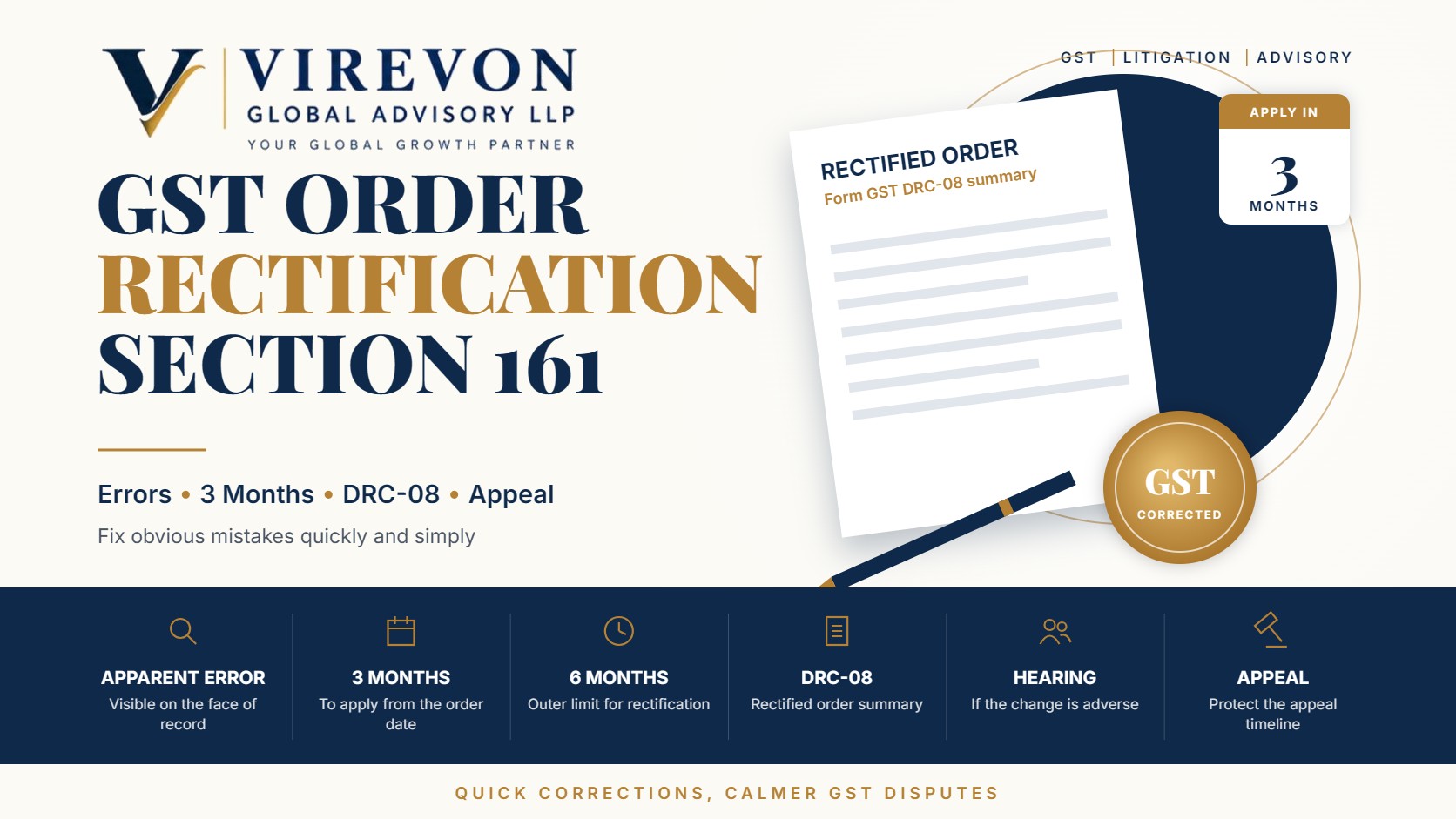
- An application by the taxpayer must be made within three months from the date of the order.
- Rectification cannot be done after six months from the date of the order, except for purely clerical or arithmetical errors.
- If the rectification would adversely affect you, the officer must give you a hearing.
- A pending rectification application does not automatically extend the appeal deadline, so plan both together.
What section 161 allows
Any authority that has passed a decision or order, or issued a notice, certificate or other document, may rectify an error apparent on the face of the record. It can do so:
- On its own;
- When the error is brought to its notice by a GST officer (central, state or union territory); or
- When the affected person points it out.
The rectified order is summarised in Form GST DRC-08 where the original was a demand order, and the demand on the portal is updated accordingly.
Errors that qualify — and those that do not
The key test is whether the mistake is obvious and does not require a long-drawn debate or fresh evidence to establish.
| Usually suitable for rectification | Usually better suited to appeal |
|---|---|
| Reply filed on the portal but not considered in the order | Disagreement on classification or rate |
| Arithmetical or totalling mistakes in the demand | Dispute on valuation or place of supply |
| Tax, interest or penalty duplicated across heads | Denial of ITC on merits (e.g. genuineness of supplier) |
| Payment already made via DRC-03 but not adjusted | Questions needing new documents or verification |
| Wrong GSTIN, period or legal name in the order | Interpretation of law where two views are possible |
| Penalty higher than the section allows | Findings of fact you disagree with |
If you need to argue the merits, rectification is not the right tool. Our guide on appealing a GST demand order under section 107 covers that route.
Time limits for rectification of GST order under section 161
- Application by the taxpayer: within three months from the date of issue of the order or document.
- Outer limit for the officer: no rectification after six months from the date of issue.
- Exception: the six-month bar does not apply where the correction is purely clerical or arithmetical arising from an accidental slip or omission.
Because the officer’s outer limit is six months, apply as early as possible — ideally within a few weeks of receiving the order — so there is enough time for the officer to act.
How to apply for rectification
- Read the order closely and list every apparent error with its page or paragraph reference.
- Gather proof from the record itself — acknowledgement of your reply, challans, returns, the show cause notice and earlier orders.
- Draft a short application explaining each error, the correct position and the relief sought. Keep it factual; avoid arguing the merits.
- File it through the GST portal in the case folder of the relevant notice or order, attaching supporting documents. Where portal filing is not available, submit it physically and keep the acknowledgement.
- Track the application and attend any hearing if the officer proposes a change that is adverse to you.
- Check the rectified order and the electronic liability register to confirm that the demand has been updated.
Rectification or appeal? Protecting your timeline
A common concern is the appeal period. The appeal against an order must generally be filed within three months of its communication, with a limited condonation window. Filing a rectification application does not, by itself, stop that clock for the original order.
A practical approach:
- If the error is obvious and is the only issue, file rectification promptly and follow up.
- If the order has both obvious errors and disputes on merits, file rectification for the former and prepare an appeal for the rest within time.
- If the rectification is not decided as the appeal deadline approaches, consider filing the appeal (with the required pre-deposit) to protect your rights, and inform the appellate authority of the pending application.
Our article on GST appeal pre-deposit and GSTAT explains the payment you need to plan for.
Drafting tips for a strong application
- Use a table listing each error, the figure in the order, the correct figure and the evidence.
- Quote the acknowledgement reference (ARN) and date of any reply the order missed.
- Attach only relevant documents, clearly labelled.
- Request a personal hearing if the matter is anything more than arithmetical.
- Keep the tone courteous and precise — officers respond best to clear, verifiable points.
Frequently asked questions
Can I apply for rectification if the officer ignored my reply?
Yes. Where a reply was filed on the portal and the order records that no reply was received, the error is apparent from the record and is a strong case for rectification. Attach the acknowledgement.
Is there a fee for filing a rectification application?
No fee is prescribed under section 161. You only need to file the application with supporting documents.
Can the officer increase the demand while rectifying?
Rectification can go either way, but if the change adversely affects you, the officer must follow natural justice and give you an opportunity of being heard.
What if the six-month limit has passed?
Only purely clerical or arithmetical errors can be corrected after six months. Other issues would need to be taken up in appeal, subject to its own time limits.
If a GST order contains an obvious error, our team can help you prepare a clear rectification application and plan your appeal timeline with confidence.
This article is general information based on the law as of September 2026, and is not legal or tax advice. Please check the facts of your own case with a professional before acting.